
Azithromycin (Zithromax) Tablets

- By Zachary S Barlow, MD (Family Medicine)
- Medically reviewed by Andrew Yung Lo, MD (Internal Medicine)
Table of Contents
- What Azithromycin Is and Who May Need It
- Azithromycin Treatment Information
- How Azithromycin Works
- Evaluation Before Treatment
- Azithromycin Dosage, Timing, and Forms
- Virtual Care and Prescription Services
- Understanding Appropriate Antibiotic Use
- Testing, Monitoring, and Follow-up
- Side Effects, Warnings, and Contraindications
- Drug Interactions and Medicines to Discuss
- How to Access Azithromycin Online by Prescription
- Azithromycin Pricing and Package Options
- What to Expect During Treatment
- Alternatives and Related Treatments
- Special Populations and Practical Considerations
- Frequently Asked Questions About Azithromycin
- Risks and Warnings for Azithromycin
What Azithromycin Is and Who May Need It
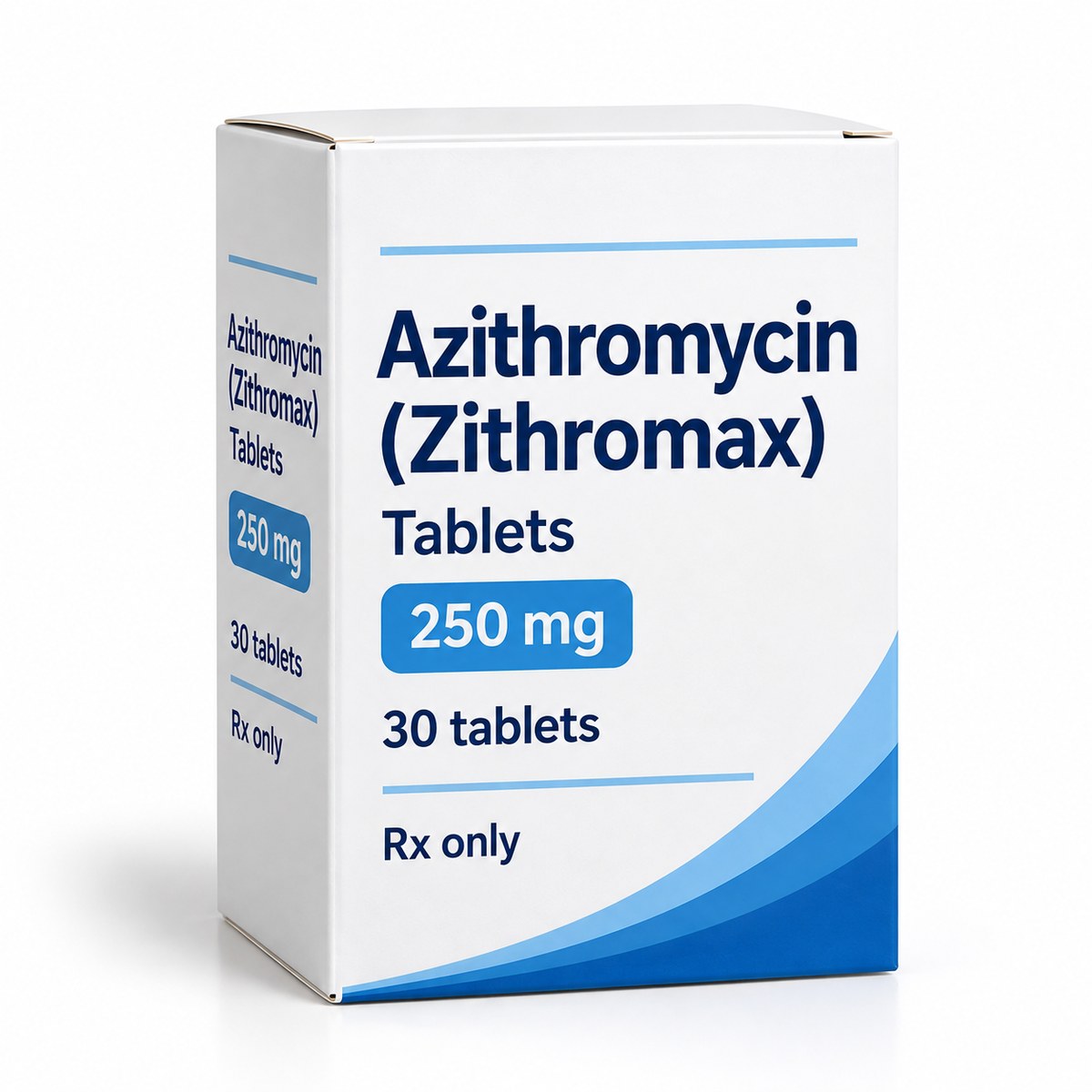
Azithromycin is a macrolide antibiotic used for selected respiratory, skin, and other bacterial infections when the organism and clinical situation are appropriate. The appropriate use of the medicine depends on confirming the diagnosis rather than matching a symptom to a product name. For susceptible bacterial infections for which a macrolide is appropriate, a prescription should come after review of severity, previous treatment, comorbid conditions, current medicines, and the practical ability to follow the treatment plan.
The decision to use azithromycin starts with the infection, not with the convenience of a five-day pack. A clinician considers the likely site, severity, duration, local resistance, allergy history, recent antibiotic exposure, pregnancy, cardiac history, drug interactions, and whether testing or examination is needed. Pneumonia, streptococcal pharyngitis, sinus disease, sexually transmitted infections, and skin infections all have different preferred regimens and resistance concerns.
A high-quality consultation separates the medicine from the marketing around it. The clinician should explain what the drug can reasonably accomplish, what it cannot accomplish, how long a fair trial takes, and what findings would change the plan. This matters because patients often arrive after reading product pages that focus on price or speed while leaving out diagnosis, contraindications, and follow-up.
The goal is a treatment plan that fits the patient rather than a transaction for a particular tablet. That plan may include azithromycin, another prescription medicine, nonprescription measures, testing, or referral. When azithromycin is chosen, the patient should know the exact strength, schedule, expected response, major warnings, and how to obtain follow-up if symptoms change.
Azithromycin Treatment Information
Treatment information for azithromycin has to be read in the context of the condition being treated. A dose that is appropriate for one indication, patient, or formulation may be inappropriate for another. The product label establishes an evidence-based framework, while the prescriber individualizes the plan according to age, organ function, interacting medicines, prior response, and the severity of disease.
Azithromycin dose and course depend on the indication, age, formulation, and patient factors. A familiar adult regimen for some respiratory indications uses a larger first-day dose followed by smaller daily doses, while other infections use different single-dose or multi-day schedules. The existence of 250 mg or 500 mg tablets does not define the treatment. The prescriber must match dose and duration to the diagnosis.
Patients should take only the formulation and strength that were dispensed for them. Do not substitute another person's tablets, combine different products with the same active ingredient, or change the schedule because a larger package has a lower price per unit. Prescription instructions are part of the treatment, not an optional suggestion printed on the bottle.
Follow-up is especially important when the treatment course is long, when the medicine has delayed benefits, when laboratory or physiologic monitoring is required, or when the condition itself can progress. A clinician may change dose, stop treatment, add another therapy, or investigate an alternate diagnosis based on the response.
How Azithromycin Works
Azithromycin binds to the bacterial 50S ribosomal subunit and interferes with protein synthesis. The drug has a long tissue half-life, which allows short dosing courses for some indications. Its activity spectrum and pharmacokinetics make it useful in specific infections, but those same features do not make it a universal antibiotic. Viral infections, resistant organisms, and illnesses requiring drainage or different coverage will not be fixed by taking a leftover Z-Pak.
Mechanism matters because it explains both benefit and limitation. A medicine can change one important biological pathway without correcting every cause of the condition. Treatment therefore works best when the diagnosis fits the mechanism and when modifiable contributors are addressed at the same time.
Pharmacology also explains why more medicine is not automatically better. Once a dose provides sufficient target effect, increasing exposure may add adverse effects faster than benefit. The recommended range, frequency, and product instructions exist to keep exposure within a studied and clinically useful window.
Patients should judge the medicine by clinically meaningful outcomes rather than by a sensation that proves the drug is 'working.' Many prescription medicines do not create a noticeable feeling when they are effective. The relevant outcome may be fewer lesions, improved function, control of inflammation, symptom relief, or a reduced rate of progression.
Evaluation Before Treatment
Before azithromycin is prescribed, the clinician should make sure the diagnosis is credible and that important alternatives have been considered. The history usually covers onset, severity, previous treatment, allergies, other medical conditions, current prescriptions, nonprescription products, and relevant family history. The examination or testing requirement depends on the condition.
The medication list should be specific. 'No regular medicines' can miss as-needed nitrate therapy, supplements, acne products, anti-inflammatory drugs, antibiotics, hormone products, recreational substances, or compounded treatments that materially change risk. The prescriber also needs to know about prior adverse reactions to medicines in the same class.
Assessment is also an opportunity to identify red flags. Severe systemic illness, unstable cardiovascular symptoms, pregnancy risk, serious infection, rapidly progressive disease, neurologic symptoms, or an atypical presentation may require in-person care before an online prescription is considered. Telehealth is valuable when it is used as medicine, not when it is used to avoid examination that the condition actually needs.
When testing is appropriate, it should answer a clinical question. Routine panels without a reason can add noise, while skipping a test that directly changes safety can be dangerous. The testing plan for azithromycin should therefore be based on the indication and patient risk rather than a one-size-fits-all checklist.
Azithromycin Dosage, Timing, and Forms
Azithromycin dose and course depend on the indication, age, formulation, and patient factors. A familiar adult regimen for some respiratory indications uses a larger first-day dose followed by smaller daily doses, while other infections use different single-dose or multi-day schedules. The existence of 250 mg or 500 mg tablets does not define the treatment. The prescriber must match dose and duration to the diagnosis.
Strength and dose are related but not identical. The strength printed on a tablet or capsule is the amount in one unit; the prescribed dose depends on how many units are taken and how often. Package tables on this page describe available price examples and should not be interpreted as instructions for dose escalation, course length, or self-directed refills.
Missed-dose advice depends on the regimen. In general, doubling a dose to compensate for a missed tablet is not a good default. For short courses, complex tapers, once-daily therapy, or as-needed medicines, the correct response can differ. The pharmacy label and clinician instructions should be followed, and the patient should ask when unsure.
Changing manufacturers usually does not change the active ingredient when an approved generic is substituted, but formulation details can matter for some medicines. Patients should read the dispensed label each time and ask about any unexpected change in tablet appearance, instructions, or formulation.
Virtual Care and Prescription Services
Telehealth can make follow-up and prescription care more accessible, but the clinical standard should remain the same: establish the diagnosis, screen for contraindications, explain alternatives, and arrange follow-up. The best online process is not the fastest checkout. It is the process that collects the information needed to make a safe decision.
How Virtual Care Works
Start Your Visit
Share the main reason for your visit, current symptoms, relevant medical history, allergies, and the medicines or supplements you use. For azithromycin, the quality of this history matters because treatment decisions depend on the diagnosis, contraindications, and other medicines that may change safety.
Consult With a Provider
A licensed clinician reviews whether the presentation fits an indication for azithromycin, whether an in-person examination or testing is needed, and whether another treatment would be more appropriate. Telehealth is a clinical evaluation, not an automatic prescription.
Receive a Treatment Plan
If treatment is appropriate, the plan can address dose, timing, expected response, monitoring, precautions, and follow-up. The plan should also explain what symptoms warrant prompt contact or urgent care rather than simply listing a tablet strength.
Fill an Eligible Prescription
When a prescription is issued, it should be filled by a licensed pharmacy using the exact product and directions prescribed. Availability, formulation, package size, and patient cost can vary by pharmacy and location.
Some patients can complete the entire evaluation remotely. Others need laboratory testing, vital signs, a physical examination, imaging, or a specialist before the prescription is finalized. A service should be willing to say that an in-person visit is needed when the clinical picture requires it.
Understanding Appropriate Antibiotic Use
Azithromycin differs from penicillins, cephalosporins, tetracyclines, and fluoroquinolones in both spectrum and safety profile. It can be valuable for specific respiratory pathogens and in patients with certain allergies, but resistance has reduced its usefulness as an automatic first choice for several common infections. Its long half-life makes dosing convenient; convenience is not evidence that it is the best antibiotic for a particular illness.
The condition itself often determines long-term success more than the first prescription. Patients benefit from understanding what drives recurrence or progression, which changes are expected over time, and what findings suggest a different diagnosis. This makes it easier to distinguish normal treatment variability from true treatment failure.
A good plan also identifies modifiable contributors. Depending on the condition, those can include smoking, alcohol, nutrition, sleep, metabolic health, skin care, medication side effects, adherence, or control of another chronic disease. These factors do not replace prescription treatment when it is indicated, but they can influence response and overall health.
When symptoms are severe, rapidly changing, or atypical, the priority is diagnosis rather than convenience. The safest care pathway may include a specialist even if the initial prescription was started in primary care or through telehealth.
Testing, Monitoring, and Follow-up
Most short courses do not require laboratory monitoring in otherwise healthy adults, but risk changes with liver disease, prolonged QT, electrolyte abnormalities, significant cardiac disease, myasthenia gravis, or interacting medicines. Follow-up focuses on whether symptoms improve as expected, whether diarrhea or allergic symptoms develop, and whether the original diagnosis still makes sense if the patient worsens or fails to improve.
Monitoring should be proportional to risk. A healthy patient using a short course may need only symptom follow-up, while chronic therapy or a high-risk medicine may require laboratory, physiologic, or specialist monitoring. The important point is that follow-up is planned in advance rather than waiting for a problem to become severe.
Patients can help by tracking the outcome that the treatment is meant to change. Useful tools include symptom diaries, standardized photographs, home blood pressure or glucose when appropriate, dates of doses, and a record of adverse effects. Objective tracking reduces the temptation to change treatment after a single good or bad day.
Follow-up is also where the diagnosis can be challenged. If the expected response does not occur, the next question is not always 'should the dose be higher?' It may be whether adherence is adequate, whether the medicine was taken correctly, whether an interaction is present, or whether a different condition is responsible.
Side Effects, Warnings, and Contraindications
Nausea, abdominal discomfort, diarrhea, and other gastrointestinal symptoms are common. Headache and mild transient symptoms can also occur. More serious concerns include allergic reactions, liver injury, QT prolongation and arrhythmia, severe or persistent diarrhea related to Clostridioides difficile, and worsening of myasthenia gravis. A short course can still cause serious adverse effects in susceptible patients.
Known serious hypersensitivity to azithromycin, erythromycin, or related macrolide or ketolide antibiotics is an important contraindication. Prior cholestatic jaundice or hepatic dysfunction associated with azithromycin is also a major concern. Cardiac risk is not a simple absolute contraindication for every patient, but prolonged QT, bradyarrhythmia, low potassium or magnesium, and certain antiarrhythmic drugs require careful evaluation.
Side-effect lists can be misleading when they are read without context. Common effects are not guaranteed, and rare events are not impossible. The clinically useful question is which symptoms are expected and manageable, which require a message to the prescriber, and which require urgent evaluation. That hierarchy should be discussed before the medicine is started.
Patients should not stop a medicine abruptly when abrupt withdrawal itself can be harmful, and they should not continue a medicine through a serious reaction just because the course is almost finished. The appropriate action depends on the drug and event. The detailed warning section later on this page highlights the issues that deserve particular attention for azithromycin.
Drug Interactions and Medicines to Discuss
Antacids containing aluminum or magnesium can affect peak concentrations when taken at the same time with some azithromycin formulations. More important clinically is the combined QT effect with other medicines that prolong repolarization. Warfarin response, digoxin exposure, and other interactions may also matter in selected patients. A medication list should include nonprescription cold remedies, supplements, and recent antibiotics.
Interaction checking is more than matching two drug names in a database. The clinical significance may depend on dose, timing, kidney or liver function, electrolyte balance, blood pressure, age, and the reason each medicine is being used. A pharmacist or prescriber can decide whether the combination is contraindicated, requires dose adjustment, or simply needs observation.
Supplements and recreational products count. 'Natural' sexual-enhancement products, vitamin concentrates, pre-workout products, bodybuilding hormones, herbal remedies, and leftover prescriptions can contain active ingredients that alter risk. Patients should bring the actual product name or a photograph of the label when possible.
Starting a new medicine during treatment is a reason to recheck interactions, especially when the new drug is an antibiotic, antifungal, heart medicine, anticoagulant, psychiatric medicine, or immunosuppressant. Likewise, the prescriber of the new medicine should know that azithromycin is being used.
How to Access Azithromycin Online by Prescription
A legitimate online prescription process should resemble ordinary medical care. The clinician needs enough information to determine whether the medicine fits the diagnosis, whether important contraindications are present, and whether examination, laboratory testing, imaging, or specialist care is necessary. A website that treats the prescription as a checkout form cannot perform that clinical work.
Prescription medicines also require a clear plan for follow-up. Some problems can be handled entirely through telehealth, while others need an in-person examination, vital signs, laboratory testing, or referral. The appropriate pathway depends on the condition and the medicine rather than on the patient's preference for a particular product.
When a prescription is appropriate, use a licensed pharmacy and the product dispensed for you. Do not use tablets obtained from an unknown seller, medication prescribed to another person, or leftover treatment from a previous illness. Strength, formulation, storage, and authenticity all matter, and the correct medicine for one episode may be wrong for the next.
For azithromycin, a high-quality online visit should specifically address the risks and monitoring described on this page. The convenience of telehealth does not change prescription status, contraindications, or the need for follow-up. If the clinician cannot obtain enough information remotely, the appropriate outcome may be an in-person visit rather than a prescription.
Start a Primary Care Prescription Consultation
A licensed provider can review whether azithromycin is appropriate for your diagnosis, current medicines, and health history and can explain treatment alternatives and follow-up.
Schedule an AppointmentAzithromycin Pricing and Package Options
The package figures below are the pricing data supplied for this page. They are displayed for price comparison only. Antibiotic treatment should never be chosen by package size or cost per tablet. The correct strength, quantity, and duration depend on the infection. Buying extra tablets for future self-treatment undermines diagnostic accuracy and antibiotic stewardship.
Medication price can differ from final patient cost. Insurance formularies, deductibles, manufacturer contracts, pharmacy location, discount programs, and the exact product dispensed can all change what a patient pays. For chronic treatment, continuity and reliable pharmacy supply can be as important as the lowest single fill price.
Prices also should not be used to infer medical equivalence. Different strengths can have different indications or dosing roles. The prescriber selects the regimen first; price comparison comes after the treatment plan is established.
1000 mg tablets
| Package | Strength | Total Price | Price per Pill |
|---|---|---|---|
| 10 pills | 1000 mg | $67.28 | $6.73 |
| 20 pills | 1000 mg | $90.05 | $4.50 |
| 30 pills | 1000 mg | $123.17 | $4.11 |
| 60 pills | 1000 mg | $186.30 | $3.11 |
| 90 pills | 1000 mg | $257.72 | $2.86 |
| 120 pills | 1000 mg | $314.64 | $2.62 |
| 180 pills | 1000 mg | $423.32 | $2.35 |
500 mg tablets
| Package | Strength | Total Price | Price per Pill |
|---|---|---|---|
| 30 pills | 500 mg | $77.19 | $2.57 |
| 60 pills | 500 mg | $108.06 | $1.80 |
| 90 pills | 500 mg | $138.94 | $1.54 |
| 120 pills | 500 mg | $169.82 | $1.42 |
| 180 pills | 500 mg | $231.57 | $1.29 |
| 270 pills | 500 mg | $324.21 | $1.20 |
| 360 pills | 500 mg | $416.83 | $1.16 |
250 mg tablets
| Package | Strength | Total Price | Price per Pill |
|---|---|---|---|
| 30 pills | 250 mg | $48.29 | $1.61 |
| 60 pills | 250 mg | $72.86 | $1.21 |
| 90 pills | 250 mg | $97.44 | $1.08 |
| 120 pills | 250 mg | $122.03 | $1.02 |
| 180 pills | 250 mg | $171.19 | $0.95 |
| 270 pills | 250 mg | $244.93 | $0.91 |
| 360 pills | 250 mg | $318.66 | $0.89 |
100 mg tablets
| Package | Strength | Total Price | Price per Pill |
|---|---|---|---|
| 60 pills | 100 mg | $45.10 | $0.75 |
| 90 pills | 100 mg | $56.81 | $0.63 |
| 120 pills | 100 mg | $68.53 | $0.57 |
| 180 pills | 100 mg | $91.97 | $0.51 |
| 270 pills | 100 mg | $127.14 | $0.47 |
| 360 pills | 100 mg | $162.31 | $0.45 |
Start Your Prescription Consultation
Discuss azithromycin treatment, dosing, monitoring, and prescription options with a licensed healthcare provider.
Schedule an AppointmentWhat to Expect During Treatment
When the infection is susceptible and the diagnosis is correct, symptoms often begin improving within a few days, but improvement is not the same as instant bacterial eradication. Some symptoms, especially cough and fatigue after respiratory infection, can persist after the antibiotic course. Worsening shortness of breath, persistent high fever, dehydration, severe chest pain, confusion, or failure to improve should prompt reassessment rather than an automatic second course.
At the beginning of treatment, establish a baseline. That may be a symptom score, photographs, blood pressure, laboratory values, frequency of events, or another measurable outcome. Without a baseline, patients tend to judge effectiveness based on memory, which can be distorted by good days and bad days.
Know the expected time course. Some medicines work within hours, while others act over weeks or months. Taking extra doses because the expected benefit is delayed can create toxicity without accelerating the underlying biology. Conversely, continuing a medicine indefinitely despite no meaningful benefit can expose the patient to risk without value.
Adherence includes more than swallowing the tablet. It includes correct timing, food instructions when relevant, required pregnancy precautions, monitoring, avoiding interacting products, and attending follow-up. If the regimen is too difficult to follow, tell the clinician; a simpler or different treatment may be safer than inconsistent use.
When treatment works, the next question is maintenance. Some conditions require continuous therapy, some use a finite course, and some need a step-down or preventive strategy. Stopping rules and maintenance planning should be part of the original prescription discussion.
Alternatives and Related Treatments
Alternative antibiotics depend on infection site, likely organism, allergy history, local resistance, renal and hepatic function, pregnancy, and previous exposure. Amoxicillin or amoxicillin-clavulanate, doxycycline, cephalosporins, fluoroquinolones, and other classes may be preferred in different situations, but each has its own limitations. Stewardship means using the narrowest effective regimen for the shortest evidence-based duration - not rotating through antibiotics until something seems to work.
Choosing among alternatives is not a contest for the 'strongest' drug. The best option is the one that fits the diagnosis, evidence, contraindications, patient goals, and practical ability to use it correctly. In chronic conditions, tolerability and adherence can outweigh a small difference in average efficacy.
Combination therapy can be rational when treatments work through complementary mechanisms, but it should have a purpose. Adding products one after another without a plan makes it difficult to identify what is helping and what is causing adverse effects. A clinician can sequence changes so that response remains interpretable.
Non-drug strategies can be important even when medication is necessary. Lifestyle change, physical therapy, skin care, counseling, risk-factor control, or procedural treatment may improve outcomes and reduce dependence on medication. The relevant non-drug approach depends on the condition.
Special Populations and Practical Considerations
Older adults and patients with cardiac disease may be more vulnerable to QT-related risk. People with significant liver disease require caution. Patients with myasthenia gravis can experience worsening weakness. Pregnancy and pediatric use are indication-specific and should follow clinician and product guidance. Sexual-health indications require current guideline-based management because resistance patterns and partner management matter.
Kidney and liver function matter for many prescription drugs because they influence metabolism or elimination. Age alone is not a contraindication, but older adults often have more comorbidities and medicines that alter risk. Younger patients may have different adherence, pregnancy, developmental, or family-support considerations.
Pregnancy, fertility, and sexual health should be addressed explicitly when relevant rather than left to assumption. Some medicines are absolutely contraindicated in pregnancy, some require a risk-benefit decision, and others affect fertility or fetal exposure indirectly. Patients should tell the prescriber about pregnancy plans before treatment changes are made.
Travel, shift work, sports, fasting, alcohol use, and access to laboratory testing can all affect a regimen. Practical barriers should be discussed because a theoretically ideal treatment is not ideal if it cannot be followed safely. The clinician can often adjust timing or choose an alternative while preserving the clinical goal.
Patients who see multiple specialists should keep an updated medication list. Duplicate therapies and interactions often occur when one clinician does not know what another has prescribed. Pharmacy records help but may not include compounded products, supplements, or medicines obtained outside the usual system.
Additional Clinical Guidance
Defining the treatment goal
Before azithromycin is started, the patient and clinician should define the outcome that matters for susceptible bacterial infections for which a macrolide is appropriate. A useful goal is observable: fewer severe symptoms, improved function, reduced progression, a measurable laboratory or clinical change, or completion of a finite treatment course. A vague goal makes it difficult to decide whether continued exposure is worthwhile. The goal should also include a time frame because the expected response to azithromycin may be rapid, gradual, or dependent on repeated use. Clear goals make follow-up more objective and reduce automatic refills when the original reason for treatment has changed.
For Azithromycin, this issue should be connected to the drug-specific mechanism, monitoring needs, and warning profile described elsewhere on this page. A clear plan documents why treatment is being used, how benefit will be judged, and what event would trigger reassessment. That makes the prescription part of coordinated medical care rather than an isolated purchase.
Confirming the diagnosis before escalation
Treatment failure is sometimes a diagnosis problem rather than a dose problem. The clinician should revisit whether the presentation still fits susceptible bacterial infections for which a macrolide is appropriate when azithromycin does not produce the expected response. Atypical symptoms, new systemic findings, rapid progression, or a pattern that does not match the original diagnosis may justify examination, testing, imaging, or referral. Rechecking diagnostic confidence is safer than repeatedly increasing a medicine that targets the wrong problem.
For Azithromycin, this issue should be connected to the drug-specific mechanism, monitoring needs, and warning profile described elsewhere on this page. A clear plan documents why treatment is being used, how benefit will be judged, and what event would trigger reassessment. That makes the prescription part of coordinated medical care rather than an isolated purchase.
Reviewing previous treatment in detail
Prior therapy should be described with enough detail to be useful: product, strength, schedule, duration, adherence, benefit, and adverse effects. Saying that a treatment "did not work" can hide underdosing, a course that was too short, incorrect use, or a different diagnosis. For azithromycin, understanding what was tried before helps the clinician decide whether the medicine is an appropriate next step and prevents unnecessary duplication of ineffective or poorly tolerated therapy.
For Azithromycin, this issue should be connected to the drug-specific mechanism, monitoring needs, and warning profile described elsewhere on this page. A clear plan documents why treatment is being used, how benefit will be judged, and what event would trigger reassessment. That makes the prescription part of coordinated medical care rather than an isolated purchase.
Choosing a dose for the patient rather than the price table
The dose of azithromycin is selected from the clinical indication, patient characteristics, and product labeling. Package prices are useful after the treatment plan is established, but they are not evidence that a higher strength, larger quantity, or longer course is appropriate. Dose selection may also change with age, kidney or liver function, interacting medicines, prior adverse effects, and the seriousness of susceptible bacterial infections for which a macrolide is appropriate. The safest dose is the dose that achieves the intended clinical effect with acceptable risk, not the dose that appears to offer the lowest cost per unit.
For Azithromycin, this issue should be connected to the drug-specific mechanism, monitoring needs, and warning profile described elsewhere on this page. A clear plan documents why treatment is being used, how benefit will be judged, and what event would trigger reassessment. That makes the prescription part of coordinated medical care rather than an isolated purchase.
Building an adherence plan
Adherence problems are common even when patients are motivated. Work schedules, travel, meals, side effects, prescription delays, and misunderstanding of instructions can all change how azithromycin is used. The clinician should explain what parts of the regimen are essential, what to do after a missed dose, and when a temporary interruption requires contact. A realistic plan is more effective than a theoretically perfect regimen that the patient cannot follow consistently.
For Azithromycin, this issue should be connected to the drug-specific mechanism, monitoring needs, and warning profile described elsewhere on this page. A clear plan documents why treatment is being used, how benefit will be judged, and what event would trigger reassessment. That makes the prescription part of coordinated medical care rather than an isolated purchase.
Planning monitoring before the first dose
Monitoring should be designed before treatment rather than added only after a problem occurs. For azithromycin, the relevant plan follows from its known risks and from the patient's baseline health. Some patients need only symptom follow-up, while others need laboratory tests, vital signs, pregnancy precautions, specialist review, or structured outcome tracking. A monitoring plan should state what is being checked, when it will be checked, and what result would change the treatment.
For Azithromycin, this issue should be connected to the drug-specific mechanism, monitoring needs, and warning profile described elsewhere on this page. A clear plan documents why treatment is being used, how benefit will be judged, and what event would trigger reassessment. That makes the prescription part of coordinated medical care rather than an isolated purchase.
Using objective measures at follow-up
Objective measures help distinguish real response from memory and day-to-day variation. Depending on susceptible bacterial infections for which a macrolide is appropriate, useful measures may include standardized photographs, symptom frequency, functional goals, home readings, laboratory values, or a validated questionnaire. The same measure should be repeated in a consistent way. When the response to azithromycin is judged objectively, it is easier to decide whether to continue, adjust, switch, or stop therapy.
For Azithromycin, this issue should be connected to the drug-specific mechanism, monitoring needs, and warning profile described elsewhere on this page. A clear plan documents why treatment is being used, how benefit will be judged, and what event would trigger reassessment. That makes the prescription part of coordinated medical care rather than an isolated purchase.
Interpreting laboratory changes in context
When laboratory monitoring is relevant, a number should not be interpreted in isolation. Baseline values, trend, dose, timing, hydration, acute illness, and other medicines can all affect the result. For azithromycin, the important question is whether a laboratory change represents expected variation, a modifiable risk, or a reason to change treatment. Repeating a test or investigating another cause may be more appropriate than reacting to a single borderline result.
For Azithromycin, this issue should be connected to the drug-specific mechanism, monitoring needs, and warning profile described elsewhere on this page. A clear plan documents why treatment is being used, how benefit will be judged, and what event would trigger reassessment. That makes the prescription part of coordinated medical care rather than an isolated purchase.
Managing comorbid conditions at the same time
susceptible bacterial infections for which a macrolide is appropriate often exists alongside other medical problems. Diabetes, cardiovascular disease, liver or kidney disease, psychiatric illness, endocrine disease, infection risk, or other chronic conditions can alter both the choice and safety of azithromycin. A focused medication visit should still consider these conditions because treating one problem while destabilizing another is not a successful outcome. Coordination with the clinician managing the comorbidity may be necessary when treatment plans overlap.
For Azithromycin, this issue should be connected to the drug-specific mechanism, monitoring needs, and warning profile described elsewhere on this page. A clear plan documents why treatment is being used, how benefit will be judged, and what event would trigger reassessment. That makes the prescription part of coordinated medical care rather than an isolated purchase.
Keeping medication reconciliation current
A medication list is most useful when it includes prescription drugs, as-needed medicines, over-the-counter products, compounded preparations, and supplements. The list should be updated when anything changes during a course of azithromycin. Interactions that were not present at the first visit can appear later when an antibiotic, antifungal, heart medicine, anticoagulant, psychiatric medicine, or hormone treatment is added. Reconciliation is an ongoing safety step, not a one-time intake form.
For Azithromycin, this issue should be connected to the drug-specific mechanism, monitoring needs, and warning profile described elsewhere on this page. A clear plan documents why treatment is being used, how benefit will be judged, and what event would trigger reassessment. That makes the prescription part of coordinated medical care rather than an isolated purchase.
Reviewing supplements and nonprescription products
Patients often omit supplements because they do not consider them medicines. That can matter with azithromycin. Vitamin concentrates, bodybuilding products, sexual-enhancement supplements, herbal remedies, skin or hair products, and high-dose minerals can create interactions, duplicate pharmacologic effects, or confuse adverse-effect assessment. Bringing the actual label or a photograph of the product helps the clinician identify ingredients that may not be obvious from the brand name.
For Azithromycin, this issue should be connected to the drug-specific mechanism, monitoring needs, and warning profile described elsewhere on this page. A clear plan documents why treatment is being used, how benefit will be judged, and what event would trigger reassessment. That makes the prescription part of coordinated medical care rather than an isolated purchase.
Rechecking interactions when another prescription starts
An interaction screen performed before azithromycin is prescribed can become outdated the next week. A new prescription from urgent care, dentistry, another specialist, or an emergency department may change exposure or additive risk. Patients should tell the new prescriber that they take azithromycin, and they should ask whether the existing treatment needs adjustment. This is particularly important when the new medicine affects blood pressure, cardiac rhythm, immune function, bleeding, liver metabolism, or the same therapeutic pathway.
For Azithromycin, this issue should be connected to the drug-specific mechanism, monitoring needs, and warning profile described elsewhere on this page. A clear plan documents why treatment is being used, how benefit will be judged, and what event would trigger reassessment. That makes the prescription part of coordinated medical care rather than an isolated purchase.
Fitting treatment into meals and daily routines
Administration instructions have practical consequences. Food, time of day, hydration, sleep schedule, or sexual timing may affect how a medicine is tolerated or how predictably it works. The patient should understand which instructions for azithromycin are pharmacologically important and which are simply convenient. If a regimen conflicts with work or daily routine, the clinician may be able to choose a different schedule or therapy rather than accepting inconsistent use.
For Azithromycin, this issue should be connected to the drug-specific mechanism, monitoring needs, and warning profile described elsewhere on this page. A clear plan documents why treatment is being used, how benefit will be judged, and what event would trigger reassessment. That makes the prescription part of coordinated medical care rather than an isolated purchase.
Planning for travel and schedule disruption
Travel can interrupt prescription supply, laboratory appointments, refrigeration or storage conditions, and follow-up. Patients using azithromycin should plan refills in advance and carry medicine in the labeled container. International travel can also create different pharmacy rules and product names. A patient who expects to be away during required monitoring should discuss timing before departure instead of improvising the regimen while traveling.
For Azithromycin, this issue should be connected to the drug-specific mechanism, monitoring needs, and warning profile described elsewhere on this page. A clear plan documents why treatment is being used, how benefit will be judged, and what event would trigger reassessment. That makes the prescription part of coordinated medical care rather than an isolated purchase.
Addressing affordability without changing the clinical plan
Cost matters because an unaffordable prescription becomes a nonadherent prescription. The solution, however, should preserve the treatment logic. A clinician or pharmacist can compare approved generics, package sizes, insurance coverage, discount options, or evidence-based alternatives. Patients should not change the dose of azithromycin, split unsuitable tablets, extend the interval, or buy from an unregulated seller simply because another option appears cheaper.
For Azithromycin, this issue should be connected to the drug-specific mechanism, monitoring needs, and warning profile described elsewhere on this page. A clear plan documents why treatment is being used, how benefit will be judged, and what event would trigger reassessment. That makes the prescription part of coordinated medical care rather than an isolated purchase.
Using a licensed pharmacy consistently
Filling azithromycin through a licensed pharmacy creates a traceable product history and gives the pharmacist access to interaction screening and counseling. Switching repeatedly among unknown online sellers makes it difficult to verify manufacturer, storage, strength, or authenticity. If the tablet appearance changes after a legitimate generic substitution, the pharmacy can confirm the product. Loose tablets in an unlabeled package do not provide the same safeguards.
For Azithromycin, this issue should be connected to the drug-specific mechanism, monitoring needs, and warning profile described elsewhere on this page. A clear plan documents why treatment is being used, how benefit will be judged, and what event would trigger reassessment. That makes the prescription part of coordinated medical care rather than an isolated purchase.
Knowing when telehealth is enough
Telehealth works best when the diagnosis can be established from history, visual information when relevant, available records, and targeted home or laboratory data. For some patients using azithromycin, that is sufficient for initiation or follow-up. Telehealth is less appropriate when the diagnosis depends on palpation, auscultation, a neurologic examination, unstable vital signs, urgent laboratory abnormalities, or a severe presentation. The mode of care should follow the clinical need.
For Azithromycin, this issue should be connected to the drug-specific mechanism, monitoring needs, and warning profile described elsewhere on this page. A clear plan documents why treatment is being used, how benefit will be judged, and what event would trigger reassessment. That makes the prescription part of coordinated medical care rather than an isolated purchase.
Knowing when specialist care adds value
A specialist may be helpful when susceptible bacterial infections for which a macrolide is appropriate is severe, atypical, treatment-resistant, associated with major comorbidity, or likely to require advanced procedures or monitoring. Referral is not a failure of primary or virtual care. It is a way to add expertise when the next decision is more complex than a routine prescription. The specialist can also confirm whether azithromycin remains appropriate after a partial or unexpected response.
For Azithromycin, this issue should be connected to the drug-specific mechanism, monitoring needs, and warning profile described elsewhere on this page. A clear plan documents why treatment is being used, how benefit will be judged, and what event would trigger reassessment. That makes the prescription part of coordinated medical care rather than an isolated purchase.
Recognizing symptoms that should not wait for routine follow-up
Every treatment plan should distinguish routine side effects from urgent warning signs. Severe allergic symptoms, fainting, major breathing difficulty, sudden neurologic or visual change, severe persistent pain, signs of serious infection, or other rapidly progressive symptoms should not wait for a scheduled refill visit. The drug-specific warnings for azithromycin later on this page identify additional situations in which prompt evaluation is important.
For Azithromycin, this issue should be connected to the drug-specific mechanism, monitoring needs, and warning profile described elsewhere on this page. A clear plan documents why treatment is being used, how benefit will be judged, and what event would trigger reassessment. That makes the prescription part of coordinated medical care rather than an isolated purchase.
Responding to complete treatment failure
If azithromycin produces no meaningful benefit after an adequate trial, simply repeating the same plan may not be useful. The clinician should verify adherence and administration, reconsider the diagnosis, review interactions, and determine whether the dose and duration were appropriate. A different drug class, combination strategy, procedure, or specialist assessment may be more rational than indefinite continuation of ineffective treatment.
For Azithromycin, this issue should be connected to the drug-specific mechanism, monitoring needs, and warning profile described elsewhere on this page. A clear plan documents why treatment is being used, how benefit will be judged, and what event would trigger reassessment. That makes the prescription part of coordinated medical care rather than an isolated purchase.
Responding to partial improvement
Partial response creates a different decision from complete failure. The patient may be benefiting from azithromycin but still have residual symptoms or progression. Options can include continuing longer, adjusting the dose within the approved plan, adding a complementary therapy, addressing a contributing condition, or switching treatments. The choice depends on how much benefit has occurred and whether adverse effects or burden remain acceptable.
For Azithromycin, this issue should be connected to the drug-specific mechanism, monitoring needs, and warning profile described elsewhere on this page. A clear plan documents why treatment is being used, how benefit will be judged, and what event would trigger reassessment. That makes the prescription part of coordinated medical care rather than an isolated purchase.
Separating adverse effects from background symptoms
New symptoms during treatment are not automatically caused by azithromycin. The timing, known pharmacology, dose change, concurrent illness, and other medicines should be considered. At the same time, a possible adverse effect should not be dismissed merely because the symptom is common in the general population. Careful attribution helps avoid both unnecessary discontinuation and unsafe continuation.
For Azithromycin, this issue should be connected to the drug-specific mechanism, monitoring needs, and warning profile described elsewhere on this page. A clear plan documents why treatment is being used, how benefit will be judged, and what event would trigger reassessment. That makes the prescription part of coordinated medical care rather than an isolated purchase.
Including patient preferences in the decision
For many conditions there is more than one reasonable treatment. Patient preferences about dosing frequency, monitoring, sexual timing, pregnancy plans, cosmetic priorities, side-effect tolerance, or speed of response can influence which option is most practical. Shared decision-making does not mean choosing any requested medicine; it means selecting among medically appropriate choices with an understanding of what matters to the patient.
For Azithromycin, this issue should be connected to the drug-specific mechanism, monitoring needs, and warning profile described elsewhere on this page. A clear plan documents why treatment is being used, how benefit will be judged, and what event would trigger reassessment. That makes the prescription part of coordinated medical care rather than an isolated purchase.
Deciding when long-term continuation is justified
Chronic treatment should have a continuing indication. At follow-up, the clinician should ask whether azithromycin is still providing meaningful benefit, whether risk has changed, and whether a lower-burden alternative is available. Long-term use can be entirely appropriate when benefit is clear and monitoring is adequate. It should not continue simply because the prescription has been renewed for years without reassessment.
For Azithromycin, this issue should be connected to the drug-specific mechanism, monitoring needs, and warning profile described elsewhere on this page. A clear plan documents why treatment is being used, how benefit will be judged, and what event would trigger reassessment. That makes the prescription part of coordinated medical care rather than an isolated purchase.
Creating a safe stopping plan
Stopping rules depend on the medicine. Some therapies can be discontinued directly, while others require tapering or a transition to another treatment. The reason for stopping also matters: completion of a course, lack of benefit, adverse effects, pregnancy, a new interaction, or an emergency reaction each leads to a different plan. Patients should know whether azithromycin can be stopped abruptly before making an independent change.
For Azithromycin, this issue should be connected to the drug-specific mechanism, monitoring needs, and warning profile described elsewhere on this page. A clear plan documents why treatment is being used, how benefit will be judged, and what event would trigger reassessment. That makes the prescription part of coordinated medical care rather than an isolated purchase.
Restarting after an interruption
An old prescription should not always be restarted automatically after a long gap. Health status, other medicines, pregnancy status, organ function, or the diagnosis itself may have changed. If azithromycin was stopped because of an adverse effect or abnormal test, the cause should be reviewed before re-exposure. A short accidental interruption is different from restarting months or years later.
For Azithromycin, this issue should be connected to the drug-specific mechanism, monitoring needs, and warning profile described elsewhere on this page. A clear plan documents why treatment is being used, how benefit will be judged, and what event would trigger reassessment. That makes the prescription part of coordinated medical care rather than an isolated purchase.
Switching from another therapy
Changing treatments may require a washout period, overlap, taper, or simply a clean switch depending on the medicines involved. For azithromycin, the clinician should consider whether the previous drug remains active, whether the combination creates additive toxicity, and how to judge response after the transition. Patients should not use remaining tablets from both regimens to avoid waste unless the plan specifically includes overlap.
For Azithromycin, this issue should be connected to the drug-specific mechanism, monitoring needs, and warning profile described elsewhere on this page. A clear plan documents why treatment is being used, how benefit will be judged, and what event would trigger reassessment. That makes the prescription part of coordinated medical care rather than an isolated purchase.
Using combination therapy deliberately
Combination treatment can be appropriate when two therapies address different mechanisms or treatment goals. It should not be created accidentally by adding multiple products that contain the same active ingredient or drug class. If azithromycin is used with another therapy, the patient should understand the role of each component and which side effects or monitoring issues belong to which medicine.
For Azithromycin, this issue should be connected to the drug-specific mechanism, monitoring needs, and warning profile described elsewhere on this page. A clear plan documents why treatment is being used, how benefit will be judged, and what event would trigger reassessment. That makes the prescription part of coordinated medical care rather than an isolated purchase.
Understanding generic substitution
An approved generic uses the same active ingredient and must meet regulatory standards for quality and bioequivalence, but tablet appearance and inactive ingredients can differ. A change in color or shape after a refill does not necessarily mean the pharmacy made an error. The label should still identify azithromycin and the prescribed strength. Patients with a suspected excipient reaction or an unexpected instruction change should contact the pharmacist.
For Azithromycin, this issue should be connected to the drug-specific mechanism, monitoring needs, and warning profile described elsewhere on this page. A clear plan documents why treatment is being used, how benefit will be judged, and what event would trigger reassessment. That makes the prescription part of coordinated medical care rather than an isolated purchase.
Involving family or a partner when useful
Some treatment plans are easier when a trusted person understands the important warnings, especially when symptoms can affect mood, cognition, sexual health, pregnancy risk, or recognition of severe reactions. Involvement should respect privacy and patient preference. For azithromycin, a partner or family member may help notice changes, support adherence, or understand when urgent care is needed.
For Azithromycin, this issue should be connected to the drug-specific mechanism, monitoring needs, and warning profile described elsewhere on this page. A clear plan documents why treatment is being used, how benefit will be judged, and what event would trigger reassessment. That makes the prescription part of coordinated medical care rather than an isolated purchase.
Keeping records that make future care safer
Patients benefit from keeping the current medication list, major laboratory results, adverse reactions, and prior treatment outcomes accessible. If care moves between primary care, urgent care, specialists, telehealth, and pharmacy services, these records reduce repeated testing and prevent contradictory prescriptions. A brief record of why azithromycin was started and how the patient responded is especially useful months or years later.
For Azithromycin, this issue should be connected to the drug-specific mechanism, monitoring needs, and warning profile described elsewhere on this page. A clear plan documents why treatment is being used, how benefit will be judged, and what event would trigger reassessment. That makes the prescription part of coordinated medical care rather than an isolated purchase.
Frequently Asked Questions About Azithromycin
Is Zithromax the same as azithromycin?
Zithromax is a brand name for azithromycin. Generic azithromycin contains the same active antibiotic, although inactive ingredients, tablet appearance, and packaging can differ. The diagnosis and dosing schedule matter more than the brand name. Patients should follow the prescription on the dispensed product rather than an old Z-Pak schedule found online.
The answer can change with diagnosis, dose, formulation, other medicines, and individual risk. For a personal treatment decision, use the instructions from the clinician who reviewed your medical history rather than general online dosing advice.
Is azithromycin a penicillin antibiotic?
No. Azithromycin is a macrolide antibiotic. That distinction matters for spectrum, side effects, resistance, and allergy history. A patient with a penicillin allergy may sometimes receive azithromycin, but it is not automatically the best substitute because the preferred alternative depends on the infection and the nature of the allergy.
The answer can change with diagnosis, dose, formulation, other medicines, and individual risk. For a personal treatment decision, use the instructions from the clinician who reviewed your medical history rather than general online dosing advice.
Does azithromycin treat colds or influenza?
No. Colds and influenza are viral illnesses, and antibiotics do not treat the viruses that cause them. Bacterial complications can occur after viral infection, but that requires a new clinical assessment. Taking azithromycin for uncomplicated viral symptoms adds adverse-effect and resistance risk without expected benefit.
The answer can change with diagnosis, dose, formulation, other medicines, and individual risk. For a personal treatment decision, use the instructions from the clinician who reviewed your medical history rather than general online dosing advice.
What is a Z-Pak?
A Z-Pak is a familiar packaging format containing azithromycin tablets for a specific multi-day regimen. Not every infection uses that schedule, and not every azithromycin prescription is a Z-Pak. The package is a convenience format, not a diagnosis. Patients should follow the prescribed regimen for the specific infection.
The answer can change with diagnosis, dose, formulation, other medicines, and individual risk. For a personal treatment decision, use the instructions from the clinician who reviewed your medical history rather than general online dosing advice.
How quickly should azithromycin work?
Clinical improvement often begins within a few days when the infection is susceptible and the diagnosis is correct. Fever, pain, or respiratory symptoms may improve at different rates, and cough can persist after the bacteria have been treated. Worsening symptoms or lack of expected improvement should trigger reassessment rather than self-extending the antibiotic.
The answer can change with diagnosis, dose, formulation, other medicines, and individual risk. For a personal treatment decision, use the instructions from the clinician who reviewed your medical history rather than general online dosing advice.
Can azithromycin cause diarrhea?
Yes. Mild diarrhea can occur with antibiotics. Severe, persistent, watery, or bloody diarrhea, significant abdominal pain, or fever can indicate antibiotic-associated colitis, including C. difficile, which can develop during treatment or even after the course. That situation requires medical evaluation.
The answer can change with diagnosis, dose, formulation, other medicines, and individual risk. For a personal treatment decision, use the instructions from the clinician who reviewed your medical history rather than general online dosing advice.
Can azithromycin affect the heart?
Yes. Azithromycin can prolong the QT interval and has been associated with torsades de pointes and other serious arrhythmias, especially in patients with existing QT prolongation, bradycardia, low potassium or magnesium, heart failure, or use of other QT-prolonging medicines. Fainting or new palpitations warrants prompt evaluation.
The answer can change with diagnosis, dose, formulation, other medicines, and individual risk. For a personal treatment decision, use the instructions from the clinician who reviewed your medical history rather than general online dosing advice.
Can I drink alcohol while taking azithromycin?
Alcohol is not the classic interaction that defines azithromycin use, but it can worsen nausea, dehydration, and liver stress and can make it harder to judge illness progression. Patients who are significantly ill or who have liver problems may have additional reasons to avoid alcohol during the course.
The answer can change with diagnosis, dose, formulation, other medicines, and individual risk. For a personal treatment decision, use the instructions from the clinician who reviewed your medical history rather than general online dosing advice.
Can azithromycin be taken with antacids?
Aluminum- or magnesium-containing antacids can affect azithromycin exposure when taken at the same time with certain formulations. Separate timing may be recommended. Acid-suppressing medicines such as proton-pump inhibitors are a different category. The pharmacist can review the exact antacid and azithromycin product.
The answer can change with diagnosis, dose, formulation, other medicines, and individual risk. For a personal treatment decision, use the instructions from the clinician who reviewed your medical history rather than general online dosing advice.
Is azithromycin safe with other QT-prolonging medicines?
The combination can increase arrhythmia risk. Examples include certain antiarrhythmics, antipsychotics, antidepressants, and other antibiotics. The significance depends on the individual drug, dose, electrolytes, cardiac history, and baseline QT interval. This is a reason to provide a complete medication list rather than relying on interaction-checker color codes alone.
The answer can change with diagnosis, dose, formulation, other medicines, and individual risk. For a personal treatment decision, use the instructions from the clinician who reviewed your medical history rather than general online dosing advice.
Can azithromycin treat strep throat?
Azithromycin can be an alternative in selected patients, such as certain penicillin-allergic patients, but resistance is a concern and penicillin or amoxicillin is typically preferred when appropriate. Testing and local guidance matter. A sore throat should not automatically trigger a macrolide prescription.
The answer can change with diagnosis, dose, formulation, other medicines, and individual risk. For a personal treatment decision, use the instructions from the clinician who reviewed your medical history rather than general online dosing advice.
Can azithromycin treat sinus infections?
Many sinus infections are viral and do not need antibiotics. When acute bacterial rhinosinusitis is diagnosed, guideline-preferred antibiotics may differ from azithromycin because of resistance patterns. The duration, severity, and pattern of symptoms help distinguish likely bacterial disease from a viral upper respiratory infection.
The answer can change with diagnosis, dose, formulation, other medicines, and individual risk. For a personal treatment decision, use the instructions from the clinician who reviewed your medical history rather than general online dosing advice.
Can azithromycin treat pneumonia?
It can be part of treatment for selected community-acquired pneumonia, but the right regimen depends on age, comorbidities, illness severity, local resistance, and whether atypical pathogens are suspected. Some patients need combination therapy or a different antibiotic. Shortness of breath, low oxygen, confusion, or significant chest pain may require urgent in-person care.
The answer can change with diagnosis, dose, formulation, other medicines, and individual risk. For a personal treatment decision, use the instructions from the clinician who reviewed your medical history rather than general online dosing advice.
Is azithromycin used for sexually transmitted infections?
Azithromycin has had roles in STI treatment, but recommendations have changed as resistance patterns and evidence evolved. Some infections now use different preferred regimens. STI care can also require testing, partner treatment, abstinence guidance, and follow-up. Old single-dose advice should not be reused without current clinical guidance.
The answer can change with diagnosis, dose, formulation, other medicines, and individual risk. For a personal treatment decision, use the instructions from the clinician who reviewed your medical history rather than general online dosing advice.
Can I use leftover azithromycin?
No. Leftover tablets may be the wrong drug, strength, quantity, or duration for the new illness. They may partially suppress symptoms while delaying the correct diagnosis, and using incomplete courses contributes to resistance pressure. A new infection deserves a new assessment.
The answer can change with diagnosis, dose, formulation, other medicines, and individual risk. For a personal treatment decision, use the instructions from the clinician who reviewed your medical history rather than general online dosing advice.
What if I miss a dose?
Take the missed dose according to the prescription instructions unless it is close to the next scheduled dose; do not routinely double the dose. Because azithromycin regimens can be short, contact the pharmacist or prescriber if more than one dose is missed or if vomiting prevents absorption.
The answer can change with diagnosis, dose, formulation, other medicines, and individual risk. For a personal treatment decision, use the instructions from the clinician who reviewed your medical history rather than general online dosing advice.
Can azithromycin cause liver injury?
Yes, clinically significant hepatic injury has been reported, although it is uncommon. New jaundice, dark urine, severe fatigue, right-upper-abdominal pain, or marked itching should prompt medical review. A history of azithromycin-associated cholestatic jaundice or hepatic dysfunction is particularly important.
The answer can change with diagnosis, dose, formulation, other medicines, and individual risk. For a personal treatment decision, use the instructions from the clinician who reviewed your medical history rather than general online dosing advice.
Can azithromycin worsen myasthenia gravis?
Macrolides, including azithromycin, can worsen myasthenia gravis in susceptible patients. Increasing muscle weakness, trouble swallowing, or breathing difficulty requires prompt assessment. The prescriber should know about myasthenia before choosing an antibiotic.
The answer can change with diagnosis, dose, formulation, other medicines, and individual risk. For a personal treatment decision, use the instructions from the clinician who reviewed your medical history rather than general online dosing advice.
Can I get azithromycin online?
Telehealth can be appropriate for some infections when the clinician can make a reliable diagnosis without a physical examination. Many respiratory and urinary symptoms overlap with conditions that need testing or examination, so an online request for a Z-Pak should not be treated as an automatic prescription.
The answer can change with diagnosis, dose, formulation, other medicines, and individual risk. For a personal treatment decision, use the instructions from the clinician who reviewed your medical history rather than general online dosing advice.
Can I buy azithromycin without a prescription?
Azithromycin is a prescription antibiotic in the United States. Legitimate online care includes a licensed prescriber and pharmacy. Avoid sites that sell antibiotics without diagnosis or prescription, because counterfeit products, inappropriate treatment, and antimicrobial resistance are real risks.
The answer can change with diagnosis, dose, formulation, other medicines, and individual risk. For a personal treatment decision, use the instructions from the clinician who reviewed your medical history rather than general online dosing advice.
Risks and Warnings for Azithromycin
QT prolongation and arrhythmia
Risk factors and situations to discuss:
- known long QT
- history of torsades
- bradycardia
- low potassium or magnesium
- QT-prolonging medicines
Warning: Azithromycin can prolong cardiac repolarization and can rarely trigger dangerous arrhythmias. Patients with major risk factors need individualized antibiotic selection. Fainting, sustained palpitations, or sudden severe dizziness during treatment warrants prompt care.
Risk is not determined by one factor alone. Dose, duration, comorbid conditions, interacting medicines, and the reason for treatment all influence the decision. New severe or rapidly progressive symptoms should be evaluated promptly rather than managed by adjusting the dose independently.
Severe allergic reaction
Risk factors and situations to discuss:
- prior macrolide allergy
- history of severe drug hypersensitivity
Warning: Anaphylaxis and serious skin reactions are possible. Facial or throat swelling, breathing difficulty, widespread blistering rash, or mucosal sores requires emergency evaluation. Do not re-challenge a severe allergy without specialist guidance.
Risk is not determined by one factor alone. Dose, duration, comorbid conditions, interacting medicines, and the reason for treatment all influence the decision. New severe or rapidly progressive symptoms should be evaluated promptly rather than managed by adjusting the dose independently.
Hepatic injury
Risk factors and situations to discuss:
- pre-existing liver disease
- prior azithromycin-associated jaundice
Warning: Serious liver injury has been reported. Jaundice, dark urine, marked fatigue, or severe right-upper-abdominal pain should prompt discontinuation and medical assessment according to clinician guidance.
Risk is not determined by one factor alone. Dose, duration, comorbid conditions, interacting medicines, and the reason for treatment all influence the decision. New severe or rapidly progressive symptoms should be evaluated promptly rather than managed by adjusting the dose independently.
C. difficile-associated diarrhea
Risk factors and situations to discuss:
- recent antibiotics
- hospital exposure
- older age
- immunosuppression
Warning: Severe antibiotic-associated diarrhea can occur during or after therapy. Persistent watery diarrhea, fever, abdominal pain, or blood in stool should be evaluated rather than treated only with over-the-counter antidiarrheals.
Risk is not determined by one factor alone. Dose, duration, comorbid conditions, interacting medicines, and the reason for treatment all influence the decision. New severe or rapidly progressive symptoms should be evaluated promptly rather than managed by adjusting the dose independently.
Myasthenia gravis
Risk factors and situations to discuss:
- known myasthenia
- new bulbar or respiratory weakness
Warning: Azithromycin can exacerbate myasthenic weakness. New swallowing difficulty, profound weakness, or breathing symptoms can be urgent.
Risk is not determined by one factor alone. Dose, duration, comorbid conditions, interacting medicines, and the reason for treatment all influence the decision. New severe or rapidly progressive symptoms should be evaluated promptly rather than managed by adjusting the dose independently.
Antibiotic resistance
Risk factors and situations to discuss:
- viral illness
- repeated macrolide exposure
- using leftovers or incomplete courses
Warning: Using azithromycin when bacterial infection is not established adds resistance pressure without expected benefit. Antibiotic stewardship protects both the individual and future patients.
Risk is not determined by one factor alone. Dose, duration, comorbid conditions, interacting medicines, and the reason for treatment all influence the decision. New severe or rapidly progressive symptoms should be evaluated promptly rather than managed by adjusting the dose independently.
Drug interaction and QT burden
Risk factors and situations to discuss:
- antiarrhythmics
- multiple QT-prolonging medicines
- electrolyte disturbance
Warning: The total risk comes from the whole medication and clinical picture, not azithromycin alone. Medication reconciliation and electrolyte correction may be important in high-risk patients.
Risk is not determined by one factor alone. Dose, duration, comorbid conditions, interacting medicines, and the reason for treatment all influence the decision. New severe or rapidly progressive symptoms should be evaluated promptly rather than managed by adjusting the dose independently.
Infantile hypertrophic pyloric stenosis
Risk factors and situations to discuss:
- exposure in very young infants
Warning: Macrolide exposure in young infants has been associated with hypertrophic pyloric stenosis. Persistent vomiting or irritability with feeding in an exposed infant requires pediatric evaluation.
Risk is not determined by one factor alone. Dose, duration, comorbid conditions, interacting medicines, and the reason for treatment all influence the decision. New severe or rapidly progressive symptoms should be evaluated promptly rather than managed by adjusting the dose independently.
Treatment failure
Risk factors and situations to discuss:
- worsening infection
- resistant organism
- incorrect diagnosis
Warning: Failure to improve can signal resistance, abscess, pneumonia severity, a viral illness, or another diagnosis. Do not simply repeat or extend azithromycin without reassessment.
Risk is not determined by one factor alone. Dose, duration, comorbid conditions, interacting medicines, and the reason for treatment all influence the decision. New severe or rapidly progressive symptoms should be evaluated promptly rather than managed by adjusting the dose independently.
Storage and completion of therapy
Risk factors and situations to discuss:
- improper storage
- sharing antibiotics
- saving leftover tablets
Warning: Store as directed, keep away from children, and use only for the patient and infection prescribed. Do not save extra tablets as a home antibiotic supply.
Risk is not determined by one factor alone. Dose, duration, comorbid conditions, interacting medicines, and the reason for treatment all influence the decision. New severe or rapidly progressive symptoms should be evaluated promptly rather than managed by adjusting the dose independently.
Storage
Store azithromycin tablets according to the manufacturer label at controlled room temperature and protect them from excessive moisture. Keep the product in its labeled container and out of reach of children. Do not share antibiotics or save unused tablets for a future illness.
Disclaimer
This page is educational and is not a substitute for an individualized diagnosis or treatment plan. Azithromycin is a prescription medicine. Eligibility, dose, formulation, duration, monitoring, and follow-up depend on the condition being treated and the patient's health history. Price information is presented as a reference and does not establish pharmacy availability, insurance coverage, product approval, or the correct dose for a particular patient. Seek urgent medical care for severe reactions, rapidly worsening illness, or emergency symptoms described on this page.